×

Windsor Words
October 2025

PRINCIPAL'S NEWS
Welcome to Term 4 at Windsor Primary School
It was terrific to see everyone as they returned from their spring break and to hear what they had all been up to. It was also wonderful to see and experience the excitement of our new landscaping at The Avenue end of the school. Only a few of our students would have memories of the ‘Little End’ play space that was removed for the building project and most of our students would know The Avenue end of the school solely as fenced off log storage. It has been a long time coming and with the new school entrance, this phase of the facilities works can be ticked off.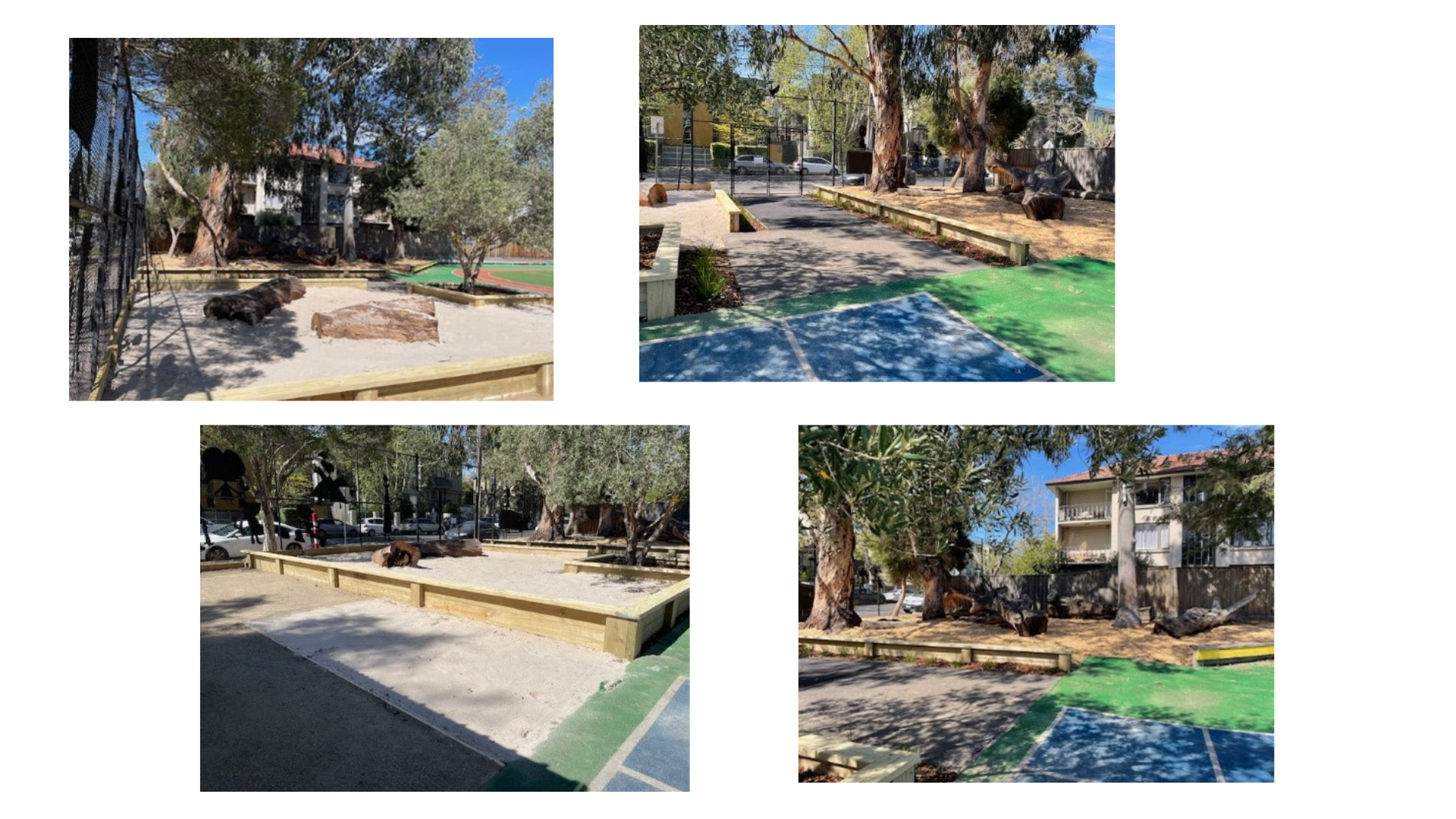
Unfortunately, some of our playground shade sail ripped in the high winds we had in the final week of Term 3. Over the break we were also able to remove the torn sails so the playground could be used. Investigation is underway regarding the replacement of the sails and whether it is some sails or all sails.
This term’s calendar is already very full. Excursions and incursions, our school production, the art show, swimming and the off to school program for our 2026 prep students just to mention a few.
School Attendance
At Windsor Primary School we want the best educational outcomes possible for our students. A crucial part of this is having the students at school. A recent newspaper article highlighted the significant decrease in attendance over the past ten years to where 40% of Victorian students are on average missing a day or more each week. At best for this 40% of students that is forty days or eight weeks a year – call it a term or 25% of the school year.The Department of Education and the school tracks attendance data in a number of ways. Two of these are students with a total of ten days (two weeks) and students with twenty days (four weeks) absences. When absent days are converted to weeks and then converted to terms, it is easy to see the significant time students are away from school.
In 2024 Windsor Primary School had 35% of students miss ten days or less. This increased to 61% for twenty days or less. Windsor is not immune to the decrease in school attendance. Our data up to the end of Term 3 this year is 29% for ten days or less and 51% for twenty days or less.
There are so many reasons why students miss school and most of these are because a student needs to stay at home (medical, religious, etc.), however we are at a time where there are a number of other reasons/pressures for students to miss school. We are asking parents to consider the necessity of keeping a student home, and if it is not a necessity, then the best place for them is at school.
Please contact the school if you have any concerns about your child’s attendance or if you would like more information about school attendance.
CALENDAR DATES
Important Dates

Windsor Primary School Presents
As we begin planning for what promises to be another wonderful year, we'd love to hear from any families who are still finalising their Prep 2026 enrolment.
We have already started planning for our transition sessions and thinking towards the 2026 school year.
Simply drop your completed form into the office, email it to windsor.ps@education.vic.gov.au or give us a call if you have any questions. When submitting your child's enrolment form, please also include a copy of your child's birth certificate/passport, immunisation records and VISA (if applicable).
Looking forward to hearing from you soon and welcoming your child to our school family in 2026.
This information is crucial for our class planning and helps us ensure we can provide the best possible learning environment for all students next year.
Intention forms for 2026 were sent home with students, you can also email the office or drop in a note by Friday 17 October.
Responding to Anxiety in Children:
Bookings can be made via the QR code

or the following website: https://www.trybooking.com/CNWMT
To book your child/ren visit www.commosh.edu.au

School uniform order forms need to be completed with payment and returned to the office either by your child or via e-mail at windsor.ps@education.vic.gov.au
School Uniform Order Form
Please remember all orders must be placed online before 9:00am at beaverstail.com.au
Lunch Order Menu








- Melbourne Cup
Date: November 03, 2026
Time: All Day
- Whole School Swimming Program @ St Mary's College - Swimable
Date: November 10, 2026
Time: 11:30am - 03:30pm
- Off To School - Session 1
Date: November 12, 2026
Time: 09:15am - 10:00am
- Whole School Swimming Program
Date: November 17, 2026
Time: 11:30am - 03:30pm
- Off To School - Session 2
Date: November 19, 2026
Time: 09:15am - 10:00am
- Off To School - Session 3
Date: November 26, 2026
Time: 09:15am - 10:00am
- Off To School - Session 4
Date: December 03, 2026
Time: 09:15am - 10:00am
- Yr 3-6 School Camp
Date: December 09, 2026
Time: All Day
- Last Day of Term 4 - Students dismissed @ 1:30pm
Date: December 18, 2026
Time: 09:00am - 01:30pm
WINDSOR INFORMATION
Windsor Primary School Presents
Swamp Diaries


Foundation 2026 Enrolments
As we begin planning for what promises to be another wonderful year, we'd love to hear from any families who are still finalising their Prep 2026 enrolment.We have already started planning for our transition sessions and thinking towards the 2026 school year.
Simply drop your completed form into the office, email it to windsor.ps@education.vic.gov.au or give us a call if you have any questions. When submitting your child's enrolment form, please also include a copy of your child's birth certificate/passport, immunisation records and VISA (if applicable).
Looking forward to hearing from you soon and welcoming your child to our school family in 2026.
Intentions for 2026
As we begin planning for the 2026 school year, we need to know if your family is relocating to a new school, state, or country for 2026.This information is crucial for our class planning and helps us ensure we can provide the best possible learning environment for all students next year.
Intention forms for 2026 were sent home with students, you can also email the office or drop in a note by Friday 17 October.
Responding to Anxiety in Children:
What you can do as a parent
By Michael Hawton, Child Psychologist (MAPS) and Parentshop founder.
In the previous article I cited the work of Professor Patrick McGorry and his colleagues in The Lancet Psychiatry Commission highlighting the mental health crisis facing our young people.
McGorry's Commission highlights several factors contributing to the current mental health crisis among Australian youth. Social media exposure, climate anxiety, and what they term "global megatrends" are creating unprecedented pressures on developing minds.¹ As parents, you're navigating uncharted territory—our children face challenges we never encountered at their age.
This reality means we need to be more vigilant than previous generations about recognising early warning signs. The old approach of "they'll grow out of it" is no longer sufficient when dealing with the current epidemic of childhood anxiety.
Here's where I want to emphasise something crucial: research shows that when significant adults in a child's life learn how to respond appropriately to anxiety, their intervention can be as effective as professional psychological treatment for mild to moderate anxiety levels.[1] This means that as parents, you have more power than you might realise to help your child develop coping skills.
However, many parents hesitate to intervene because they worry about being "mean" or making things worse. This is misguided thinking. Teaching children to challenge anxious thoughts and face manageable fears isn't cruel—it's essential preparation for life's inevitable challenges. As I often say, it's better to prepare the child for the road rather than the road for the child.
Red Flags That Warrant Professional Help
While many children can manage anxiety with family support, certain warning signs indicate the need for professional intervention:
- Anxiety that persists despite consistent family support and doesn't improve over several weeks
- Severe avoidance behaviours that significantly disrupt school attendance or family functioning
- Physical symptoms such as chest pain, difficulty breathing, or panic attacks
- Any mention of self-harm or suicidal thoughts
- Anxiety that's accompanied by depression, eating disorder behaviours, or substance use.
The goal isn't to eliminate anxiety entirely—that's neither possible nor desirable. Instead, we want to help children develop what I call "robustification" skills. This involves teaching them to recognise anxious thoughts, question their validity, and develop practical coping strategies.
Start by helping your child understand that anxiety is a normal human emotion that everyone experiences. Normalise the feeling while teaching them that they don't have to be controlled by it. Encourage problem-solving rather than avoidance and model calm responses to stress in your own life.
Create predictable routines and environments that foster a sense of security, whilst gradually exposing your child to manageable challenges that build confidence. Remember, building resilience is like strengthening a muscle—it requires consistent, progressive effort.
Given the scale of the mental health crisis documented by McGorry and his colleagues, we can't afford to wait for symptoms to become severe before acting. Early recognition and intervention are our best tools for helping children develop the resilience they'll need to navigate an increasingly complex world.
As parents and community members, we have a responsibility to become more skilled at recognising anxiety in children and responding effectively. This isn't about creating a generation of anxious parents, but rather about equipping ourselves with the knowledge and tools needed to support our children's mental health in challenging times.
By learning to recognise anxiety early and responding with appropriate support for your child, we can help reverse the troubling trajectory that McGorry's research has identified and give our children the tools they need to thrive.
References:
- McGorry, P.D., Mei, C., Dalal, N., et al. (2024). The Lancet Psychiatry Commission on youth mental health. The Lancet Psychiatry, 11(9), 731-774.
- Creswell, C., Parkinson, M., Thirwall, K., & Willetts, L. (2017). Parent led CBT for child anxiety. Guilford Press: New York.
- Healthdirect Australia: https://www.healthdirect.gov.au/anxiety-in-children
- Royal Children's Hospital Melbourne: https://www.rch.org.au/anxiety/
- Parentshop Parent resources: https://www.parentshop.com.au/for-parents/
- Australian Psychological Society – Find a psychologist: https://psychology.org.au/find-a-psychologist
WPS Breakfast Activities Club
A reminder that staff supervision in the morning does not begin until 8:45am. Students arriving before 8:45am without parent supervision are required to be booked into the WPS Breakfast Activities Club, which runs from 7:30am - 8:45am everyday. Students must be pre-booked to attend. The cost is $10.75 per session per child and includes breakfast and activities.Bookings can be made via the QR code
or the following website: https://www.trybooking.com/CNWMT
After School Care
Our After School provider is Community OSH, which runs from 3:30pm - 6:00pm.To book your child/ren visit www.commosh.edu.au
School Uniform
Please ensure that your child is dressed in correct school uniform before they leave the house in the morning.School uniform order forms need to be completed with payment and returned to the office either by your child or via e-mail at windsor.ps@education.vic.gov.au
School Uniform Order Form
Lunch Orders
Lunch orders are available on Mondays and Fridays.Please remember all orders must be placed online before 9:00am at beaverstail.com.au
Lunch Order Menu
CLASSROOM NEWS
P.E.
PARENTS & FRIENDS
Toasties Tuesday
You can order your cheese toasties for lunch each Tuesday morning. Simply bring along your $2 and give it to your teacher at roll call and the toasties will be delivered to the classrooms at lunchtime.Ice Cream & Icy Pole Fridays – 3:30pm
Ice Cream and Icy Poles will be on sale every Friday from 3:30pm for Term 4! Don’t forget to bring your $2 on Friday, see you at the food tech window!
COMMUNITY NEWS